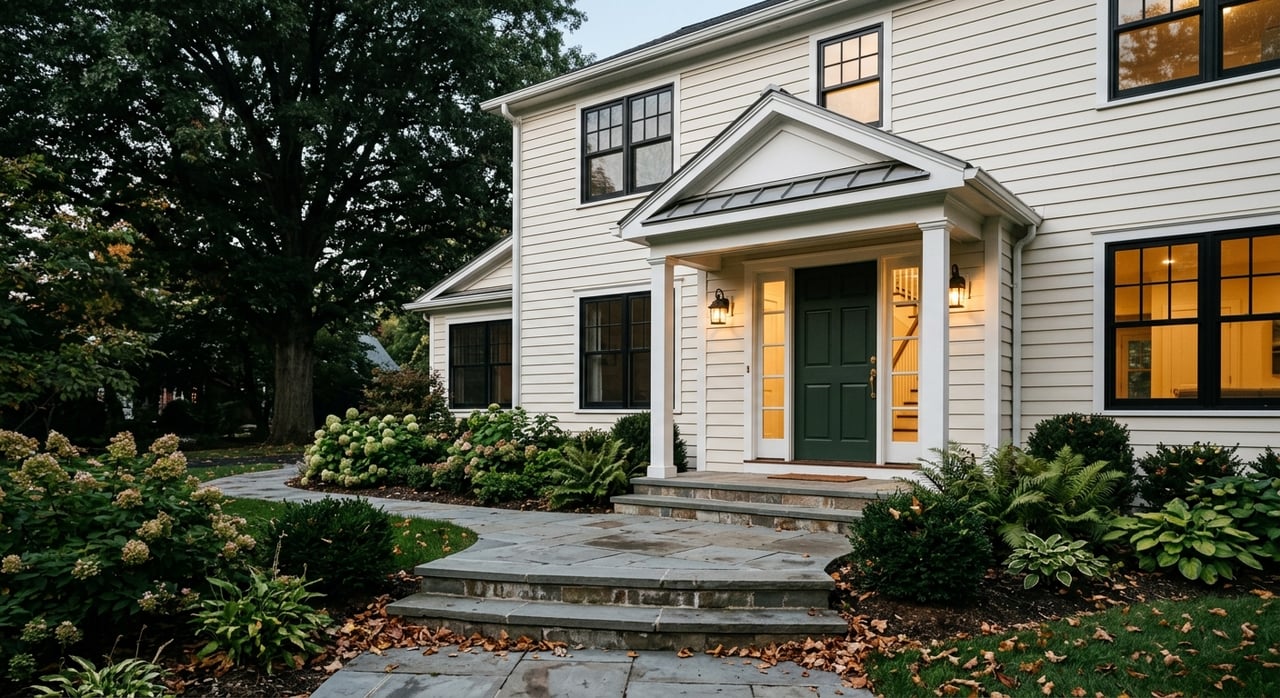
First-Time Buyer Roadmap To Essex County Suburbs
June 11, 2026
June 11, 2026
Buying your first home in Essex County can feel like trying to hit a moving target. Prices, competition, and inventory can shift a lot from one town to the next, and that can make the process feel overwhelming fast. The good news is that Essex County is not one single market, and that gives you options. If you understand where your budget fits, what kind of neighborhood feel you want, and how timing affects your search, you can make smarter decisions with more confidence. Let’s dive in.
A first-time buyer roadmap in Essex County should start with one simple truth: town selection matters more than county averages. County-wide data shows 1,897 homes for sale, a median listing price of $579,000, 29 median days on market, and a 104% sale-to-list ratio as of March 2026. At the same time, New Jersey REALTORS reports a year-to-date median sales price of $799,999 for single-family homes and 2.3 months of supply in April 2026, which still points to fairly tight inventory.
That spread tells you something important. Essex County includes towns with very different price points, competition levels, and housing styles. If you focus only on county headlines, you can easily overestimate or underestimate what is realistic for your first purchase.
For many first-time buyers, the smartest move is to build a shortlist by budget band before you fall in love with a specific home. That helps you stay grounded and avoid spending time on towns that may feel like a stretch in today’s market.
If you want a suburban setting with a more approachable starting point, several towns stand out.
Bloomfield is often one of the first places buyers look for a reason. Its median listing price is $537,000, with 83 homes for sale, 34 median days on market, and a 104% sale-to-list ratio. It gives many buyers a chance to stay in Essex County while keeping closer to starter-friendly pricing than some nearby towns.
West Orange is another practical option, especially if you want more inventory to work with. It shows a median listing price of $649,000, 174 homes for sale, 24 median days on market, and a 107% sale-to-list ratio. That larger inventory base can give you more choices, even though the market is still active.
Nutley sits higher, with a median listing price of $652,400 and a 109% sale-to-list ratio. It remains competitive, but it often comes in below towns like Maplewood, South Orange, and Montclair on the pricing ladder.
Verona is worth watching closely if you want a quieter suburban feel. Its median listing price is $665,000, with 40 homes for sale, 23 median days on market, and a 103% sale-to-list ratio. Realtor.com labeled Verona a buyer’s market in March 2026, which makes it one of the more notable places for buyers seeking a bit more leverage.
Some Essex County suburbs are popular with first-time buyers in theory, but tougher in practice because of price and competition.
Maplewood has a median listing price of $812,000, 61 homes for sale, 20 median days on market, and a 107% sale-to-list ratio. South Orange comes in even higher, with a median listing price of $987,000, 35 homes for sale, 27 median days on market, and a 106% sale-to-list ratio. Both markets remain tight and competitive.
Montclair is one of the county’s most competitive markets. It shows a median listing price of $999,000, 95 homes for sale, 22 median days on market, and a striking 123% sale-to-list ratio. For many first-time buyers, Montclair can become more of a long-term goal or stretch target than an entry point.
Livingston and North Caldwell are useful benchmark towns at the top end. Livingston has a median listing price of $1.5675 million, while North Caldwell sits at $1.325 million. For most first-time buyers, these markets are better used as context than as likely starting points.
Your budget is only one part of the decision. The next big question is how you want to live day to day.
Some buyers want a more walkable, station-centered suburb where errands, dining, or commuting can feel more convenient. Others want to maximize house size, lot size, or a quieter neighborhood layout, even if that means a more car-dependent routine.
Montclair is the clearest example of a village-center market in Essex County. NJ Transit’s Montclair-Boonton Line serves Bay Street, Walnut Street, Watchung Avenue, Upper Montclair, Mountain Avenue, Montclair Heights, and nearby stations including Glen Ridge, Bloomfield, and Watsessing Avenue. That station network supports the way many buyers already think about Montclair: a town with multiple pockets and a more connected layout.
Maplewood and South Orange also stand out for buyers who prioritize train access. Both have NJ Transit stations on the Morris & Essex Line and Gladstone Branch, which supports their reputation as station-centered suburbs with village-style market patterns.
Bloomfield sits in the middle. It can offer a more accessible price point than some better-known commuter towns, while still giving buyers station-adjacent housing options and a more compact market core.
If your priority is more house for the money or a quieter neighborhood structure, other towns may fit better.
Verona has a more suburban feel and fewer listings than West Orange, which can make the search feel more selective and neighborhood-specific. West Orange has a broader spread of submarkets, including Gregory, St. Cloud, The Valley, and Eagle Ridge, which often means a more house-by-house search rather than one central downtown-focused experience.
Nutley, Cedar Grove, and Livingston also fit the more suburban side of the county’s market spectrum. Cedar Grove, in particular, is better viewed as an upper-budget option, with a median listing price of $794,499 and a 109% sale-to-list ratio.
One of the biggest first-time buyer mistakes is assuming every town moves at the same speed. In Essex County, competition can vary meaningfully by location.
A quick look at sale-to-list ratios shows the range. Verona sits at 103%, Bloomfield at 104%, South Orange at 106%, Maplewood at 107%, West Orange at 107%, Nutley at 109%, and Montclair at 123%. That does not mean every listing will sell above asking, but it does show how important it is to prepare for different negotiation environments.
In practical terms, that means your strategy should change depending on where you are shopping. In a town like Montclair, you may need to move quickly and come in with very strong financing. In a town like Verona, you may have a bit more room to compare options and negotiate more carefully.
Many buyers ask whether they should shop in spring or wait until fall. The answer depends on what matters more to you: more choices or less competition.
Spring is still the main inventory-building season. Realtor.com’s 2026 spring market reporting notes that spring is when the market typically comes to life, and its April 2026 update said new listings rebounded strongly after Easter while inventory improved. If you want the widest selection, spring usually gives you more homes to consider.
Fall can be useful if your goal is to face fewer competing buyers. Realtor.com’s seasonal analysis has historically pointed to early-to-mid October as a strong buying window, with the third week of October showing up to 32.6% more active listings than the start of the year in broader national patterns. That is not an Essex County guarantee, but it gives you a planning benchmark.
For Essex County specifically, the bigger lesson is to be ready before the right listing appears. With 1,897 homes for sale county-wide, 29 median days on market, and only 2.3 months of single-family supply, well-positioned homes can still move fast in many suburbs.
A smart Essex County roadmap is less about finding the perfect town on day one and more about narrowing the field in the right order. When you know your budget, your lifestyle priorities, and your tolerance for competition, your search becomes much more manageable.
A practical framework can look like this:
This kind of plan helps you stay flexible without feeling scattered. It also keeps emotion from taking over when you are shopping in a market with wide price differences and fast-moving listings.
For a first-time buyer, Essex County can be exciting because it offers real variety. It can also be challenging because a strategy that works in Bloomfield may not work in Montclair, and what feels realistic in West Orange may look very different in Maplewood or South Orange.
That is why local guidance matters. When you have someone helping you compare towns, spot realistic opportunities, and adjust strategy based on the market you are actually in, the process gets much clearer. Instead of guessing, you can move forward with a plan that fits your goals.
If you are starting your first home search in Essex County and want practical guidance tailored to your budget and priorities, connect with Tyler Pontier. He takes a relationship-first approach and helps buyers make sense of North Jersey’s fast-changing suburban markets with clear communication and steady support.
Stay up to date on the latest real estate trends.
Tyler is dedicated to helping you find your dream home and assisting with any selling needs you may have. Contact Tyler today for a free consultation for buying, selling, renting, or investing in Morris Plains.
Get In Touch With My Team To Learn More
ADDRESS 374 Speedwell Ave Morris Plains NJ 07950