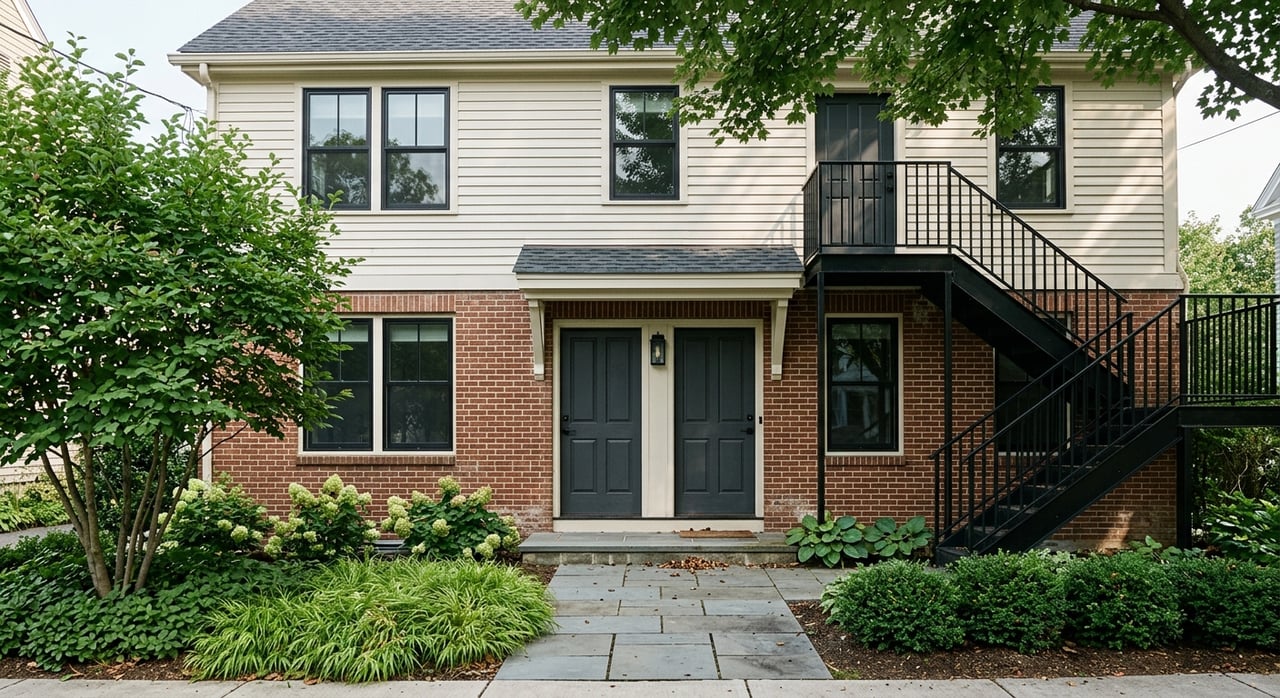
Bergen County Small Multifamily Investing Strategies
July 2, 2026
July 2, 2026
If you are looking for a way to build long-term wealth in North Jersey, small multifamily property in Bergen County can look very appealing. You get the draw of a dense, high-income county with a large housing base, but you also face real pressure from taxes, compliance costs, and careful deal selection. If you are thinking about buying a two-family, three-family, or four-family property, this guide will help you focus on the numbers and local factors that matter most. Let’s dive in.
Bergen County offers a mix that gets many investors interested. It had 955,732 residents in 2020, an owner-occupied rate of 65.3%, and a median household income of $124,884. In a market like that, rental demand can be supported by limited space, high home values, and commuter appeal.
The county is also densely built, with 4,105.6 people per square mile and a median owner-occupied home value of $623,000. For many buyers, that makes small multifamily property one of the more practical ways to enter the market as an investor or owner-occupant. At the same time, those same strengths can come with higher acquisition costs and tighter margins.
Bergen County has a real small multifamily housing base, even if it is not the dominant property type. In 2020, the county had 50,274 units in two-family structures and 21,905 units in three- to four-family structures. Together, those made up about 20.1% of the county’s housing stock.
That matters because you are not chasing a rare product type with no market history. There is enough inventory to create a real niche for investors, owner-occupants, and buyers looking for rental income. Still, it is a finite segment, so strong properties can attract attention quickly.
Before you get too far into a deal, you need a realistic rent baseline. Bergen County’s 2020-2024 median gross rent was $1,914. That gives you a broad county-level reference point, but it should not be treated as a plug-and-play number for every unit.
For a more detailed size-based benchmark, the FY 2026 fair market rent figures for the Bergen-Passaic metro area were:
These numbers can help you pressure-test your income assumptions. But they are only a starting point. You still need to confirm lease comps, unit condition, utility responsibility, parking, and any differences between renovated and unrenovated units.
In Bergen County, property taxes are one of the biggest reasons a deal works on paper but struggles in real life. The New Jersey Treasury reported a 2024 average residential tax bill of $13,600 for Bergen County. Broken down monthly, that is about $1,133 before you even get to insurance, repairs, or mortgage payments.
The bigger issue is that tax bills vary widely by municipality. The same state data shows a spread from $1,937 in Teterboro to $23,837 in Tenafly and $20,375 in Ridgewood. That means you cannot underwrite Bergen County as one uniform market.
If you are comparing two similar multifamily properties in different towns, the tax bill alone can change the entire investment story. A property with slightly lower rent but more manageable taxes may outperform a higher-rent building with heavier carrying costs.
A smart small multifamily analysis starts with income, but it should not stop there. You want to estimate realistic gross monthly rent, subtract vacancy or credit loss, deduct operating expenses and reserves, and then compare the remaining income to debt service. This gives you a much clearer picture than focusing on gross rent alone.
A practical budget should include:
If you plan to live in one unit, keep your personal housing costs and rental property performance clearly separated. That makes it easier to understand how the building is actually performing. It also helps you avoid the common mistake of overstating the investment side of the property.
Many first-time investors see a two-family or three-family listing and start multiplying advertised rents. That is understandable, but it can create a false sense of confidence. A property can look attractive at the top line and still disappoint after taxes, repairs, insurance, and vacancy are added back in.
In Bergen County, this matters even more because the county’s cost structure can be unforgiving. If your assumptions are too optimistic, there may not be much room for error. Conservative underwriting is not about being negative. It is about protecting yourself before you commit.
Cash flow is only part of the picture. You also need to understand the local rules that can affect rent growth, timing, and compliance costs. In New Jersey, there is no statewide rent-control law, but municipalities may adopt their own rent-control or rent-leveling ordinances.
That means you should check with the municipal clerk to confirm whether a specific property or unit is covered. You do not want to assume future rent increases are available if local rules limit them. This is especially important if your plan depends on raising rents after purchase.
There is also a state law that may exempt newly constructed multiple dwelling units from local rent-control limits for up to 30 years, subject to notice requirements. If that issue is relevant to a property you are considering, it should be reviewed carefully as part of due diligence.
In New Jersey, the Bureau of Housing Inspection oversees hotels and multiple-family buildings of three or more dwelling units. That makes inspection status an important item for buyers looking at triplexes or four-family properties. You want to know whether the building is current, whether there are open issues, and whether compliance work could affect your early ownership costs.
Lead-paint rules can also come into play for single-family, two-family, and multiple rental dwellings, with some exemptions for certain newer properties and certain registered properties. In practical terms, this means your pre-closing checklist should include lead compliance, registration requirements, and any inspection-related documentation that affects the property.
These items may not look as exciting as rent projections, but they can have a direct impact on your timeline and your budget. A cleaner compliance record can make the transition into ownership much smoother.
When you are choosing between small multifamily opportunities in Bergen County, focus on the factors that most directly shape long-term performance. A simple side-by-side comparison can keep you from getting distracted by cosmetic upgrades or headline rent figures.
Here are a few of the most important items to compare:
A property with modest current income can still be worth a serious look if expenses are durable and the compliance picture is clean. On the other hand, a property with strong gross rent may be less attractive if taxes are high and future rent flexibility is limited.
For most buyers, investing in small multifamily property in Bergen County is not about finding a perfect building. It is about finding a property where the numbers still make sense after you account for taxes, insurance, vacancy, repairs, and local rules. That is where disciplined analysis can give you an edge.
The county offers real opportunity because two-family and three- to four-family housing is a meaningful part of the market, and rent benchmarks support serious investor interest. But the most successful buyers usually stay grounded. They verify income, budget conservatively, and pay close attention to town-level costs before moving forward.
If you are weighing a Bergen County multifamily purchase and want a strategy-minded, numbers-conscious approach, Tyler Pontier can help you evaluate your options and move forward with clarity.
Stay up to date on the latest real estate trends.


Tyler is dedicated to helping you find your dream home and assisting with any selling needs you may have. Contact Tyler today for a free consultation for buying, selling, renting, or investing in Morris Plains.
Get In Touch With My Team To Learn More
ADDRESS 67 E Park Pl Morristown, NJ 07960